The first Restauration
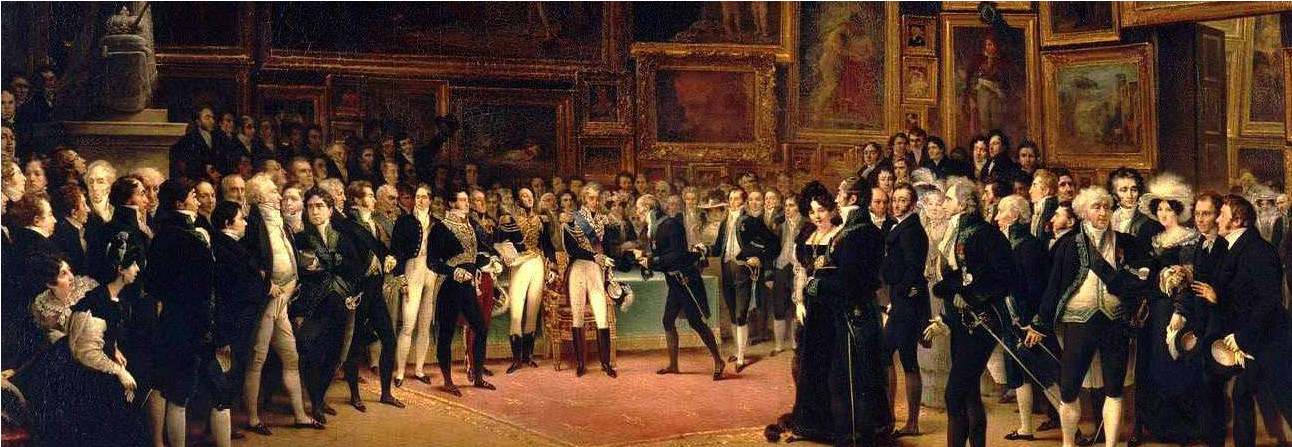
19th century (1815 – 1830)
Louis XVIII and Charles X showed little interest in the decorative arts. Cabinetmakers produced cheaply, without initiative. Yet the nobility hoped to recover its former way of life. Romanticism brought the Middle Ages into fashion, with its fine tales of knights and princesses.
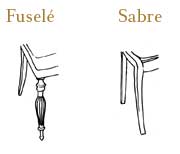
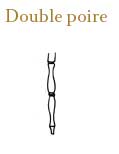
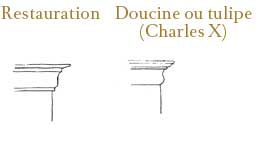
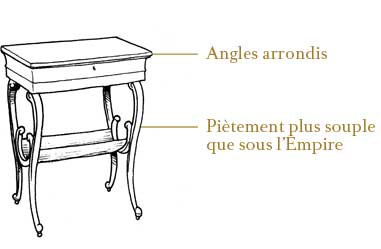
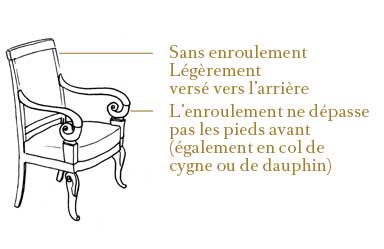
The forms remain “Empire”, but the angles soften, the legs curve, and the bronzes gradually disappear — entirely so under Charles X, when the Duchesse de Berry made the fashion for pale furniture with dark inlay triumph.
Furniture with Gothic motifs also appeared. The cycle of pastiches of earlier styles had begun; it would last throughout the 19th century.
Distinctive features
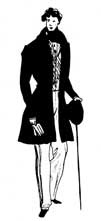
The era
Materials — Under Louis XVIII: walnut and fruitwoods. Under Charles X: lemonwood, ash, maple, elm, plane, thuja, with inlays of rosewood and purpleheart.
New furniture — Round table on a central shaft with three console supports, low sofa, tilt-top guéridon, work table, Voltaire armchair.
Renowned makers — Werner, Bénard, Répond, Bellangé, Jacob-Desmalter, Lemarchand, Baudry.
Special features — Softened Empire forms, pale woods (under Charles X), inlay (under Charles X).
Notable figures of the period — Louis XVIII, Charles X, Géricault, Stendhal.
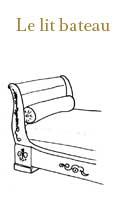
Seats and furniture
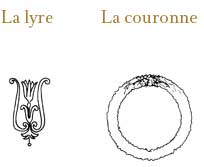
Characteristic ornament

Legs, cornice and mounts